


If you have missing teeth, you’ve likely thought about how a complete smile could change your daily life. The team at Generations Dental can help you explore solutions like dental implants, which provide a stable, long-term solution by mimicking the function of a natural tooth root. But with different options available, you might wonder which one is right for your situation.
The 3 main types of dental implants are endosteal, subperiosteal, and zygomatic. Each type is designed for different needs, depending on your jawbone health and the location of the missing teeth. A dental professional can help you discover the appropriate implant solution for your smile.
Endosteal Implants & How They Work
What Is an Endosteal Implant?
Think of an endosteal implant as the standard of tooth replacement—it’s the one most people get. Instead of resting on top of the gums, these are placed directly into the jawbone to act as a permanent, high-tech anchor.
Here is the quick breakdown of how they work:
- The Build: They are usually small, screw-shaped posts made from titanium, which is totally body-safe.
- The Process: Over time, the implant actually fuses with your jawbone. This creates a rock-solid foundation that won’t budge.
- The Result: Once a crown is attached to the post, it functions just like a natural tooth. You can eat, talk, and smile without worrying about anything slipping.
In short, it’s a permanent “root” that gives your new tooth the stability it needs to feel real.
Who Is a Good Candidate?
For an endosteal implant to be successful, you need a healthy and sufficient jawbone. The bone must be dense enough to support the implant and hold it firmly in place. Your overall oral health also plays a role in the process.
A thorough dental consultation can determine if this is the right path for you. A dental professional can evaluate your bone structure and help you understand your options for tooth replacement.
Subperiosteal Implants & Their Use
What Is a Subperiosteal Implant?
If the idea of drilling into the bone sounds like a bit much—or if your jawbone isn’t quite thick enough for a standard implant—a subperiosteal implant might be the answer. Instead of going into the bone, this type sits right on top of it, tucked neatly under your gum line.
Here’s how they’re put together:
- Custom Fit: A metal frame is designed to hug the specific contours of your jawbone like a glove.
- The Support: Small posts attached to that frame peek through your gums.
- The Finish: Your new teeth snap right onto those posts, giving you a secure fit without the need for deep drilling.
It’s essentially a “saddle” design that provides a solid foundation for your smile by working with the bone you already have.
When Is This Type of Implant Used?
A subperiosteal implant is a useful alternative when your jawbone isn’t healthy or wide enough for endosteal implants. You might not have enough bone height, or perhaps a bone graft is not a suitable option for you.
Subperiosteal implants can provide a stable base for different tooth replacement options in these situations. They help restore function and appearance when traditional implants aren’t a fit for your anatomy.
Zygomatic Implants for Special Cases
What Makes Zygomatic Implants Different?
Zygomatic implants are the “specialists” of the dental world. They aren’t used very often, but they are a lifesaver for people who have experienced significant bone loss in their upper jaw—usually where a standard implant wouldn’t have enough “grip” to stay put.
Because they have a much longer distance to travel, they work a bit differently:
- The Anchor Point: Instead of using the jawbone, these are anchored into your zygoma (your cheekbone).
- The Design: To reach that higher bone, these implants are much longer than the standard versions.
- The Complexity: Because they involve the cheekbone area, the procedure is more advanced and requires a highly specialized surgeon.
Essentially, they provide a “plan B” for a secure smile when the upper jawbone isn’t strong enough on its own.
A Solution for Severe Bone Loss
If you have considerable bone loss in your upper jaw, zygomatic implants can offer a solution. They can often help you avoid the need for extensive bone grafting procedures, which can add time and complexity to your treatment.
These implants provide strong support for upper teeth, crowns, or bridges. A detailed dental evaluation is necessary to see if this specialized approach is appropriate for your health needs.
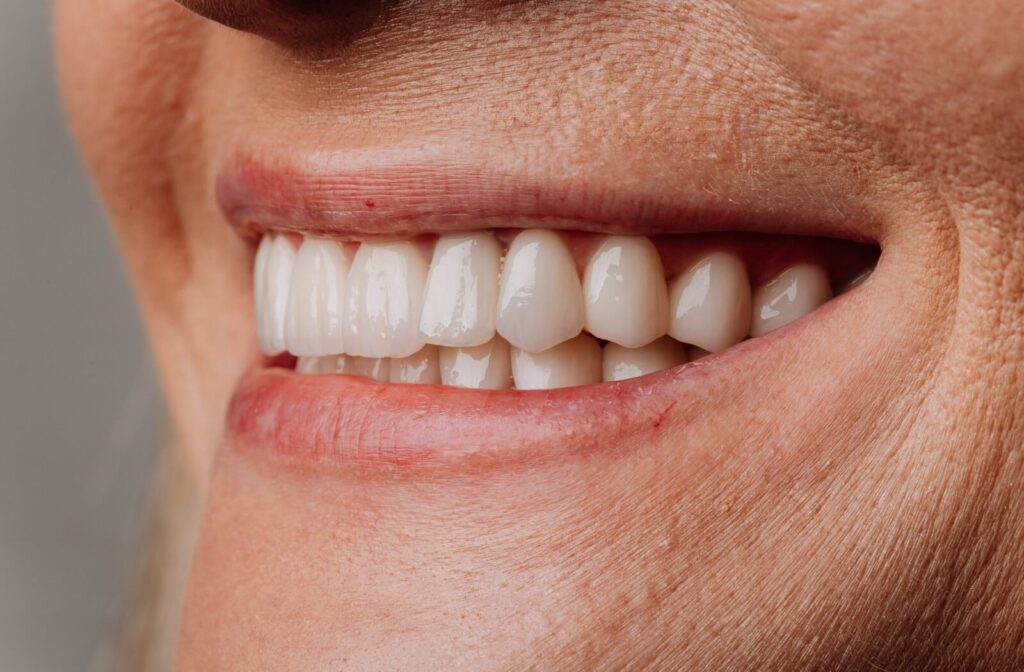
Implant Materials: Titanium vs. Ceramic
The Strength & Durability of Titanium
Titanium has been used in dental implants for many years. It is a very strong yet lightweight material that is biocompatible, meaning your body accepts it well. This quality is why it’s so common in medical procedures.
One of titanium’s key benefits is its ability to integrate with bone in a process called osseointegration. This creates the solid, lasting bond needed for a successful implant that feels like a part of you.
The Esthetics & Properties of Ceramic
Ceramic implants, often made from zirconia, are a metal-free option. Their natural, tooth-coloured appearance is a major benefit, as there is no dark metal to show through thin gums, helping to create a very natural-looking result, which is a key goal of cosmetic dental services.
Zirconia is also very strong and biocompatible. For anyone with metal sensitivities or allergies, ceramic implants can be a great alternative that provides both function and a pleasing look.
Find Your Implant Solution
Talk About Your Personal Needs
Since every smile is different, finding the right tooth replacement is all about matching the tech to your specific needs.
Here is how you and your dental team will figure out the best path forward:
- Your Unique Profile: The right choice depends on your current oral health, how much bone density you have, and what you’re hoping to achieve.
- The Consultation: This is your chance to share your goals and any concerns you might have about the process.
- The Game Plan: After a thorough exam, your dentist can map out which implant style—endosteal, subperiosteal, or zygomatic—will work best for your anatomy.
Your First Step Toward a New Smile
The journey to a restored smile begins with a professional exam. From there, a dental team can develop a personalized treatment plan that is tailored to you. You can explore all your options and get clear answers to your questions.
Dental and oral health are gifts that can be with you your whole life. The team at Generations Dental is devoted to the care and compassion you need to maintain it. If you’re looking for a dentist in Grande Prairie, AB, contact Generations Dental to learn how they can help. The team is ready to welcome you to the practice.